Source: fca.org.uk
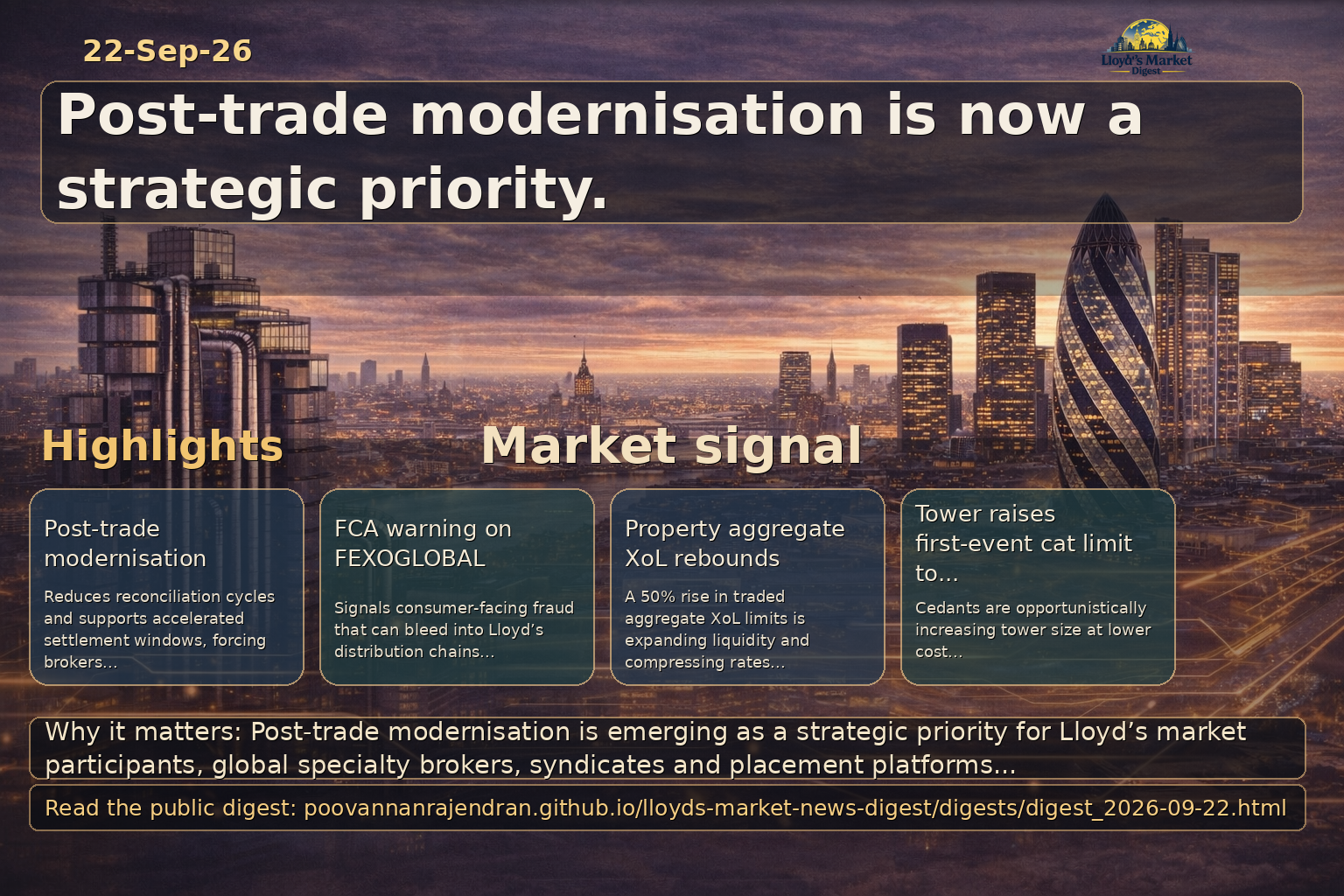
Why it matters: FCA warning on FEXOGLOBAL signals direct consumer-facing fraud risk that can bleed into Lloyd’s distribution chains via intermediaries, placement platforms or reinsurers exposed to redirected client flows.
- Immediate action: enhance onboarding and counterparty vetting on platforms and broker panels to prevent upstream exposure to unauthorised entities.
- Client protection: reaffirm communications to clients and intermediaries that dealings with unauthorised firms void access to FOS and FSCS protections.
- Operational control: integrate FCA warnings into transaction-monitoring rules and referral escalation processes for suspicious counterparties.
Source: fca.org.uk
Why it matters: Finance Farm appears on the FCA Warning List; similar unauthorised activity presents reputational and financial contagion risks for brokers and syndicates if leveraged in product distribution or investor sourcing.
- Platform governance: require enhanced proof of authorisation and audit trails before onboarding new distribution partners or lead brokers.
- Syndicate exposure: review policies that permit third-party introductions or white‑label placements to limit indirect exposure to fraudulent entities.
- Market messaging: coordinate client advisories and KYC refreshes where suspect names intersect client lists or referral networks.
Source: fca.org.uk
Why it matters: FCA partnership to expand protection insurance coverage presents a strategic market opportunity for Lloyd’s and specialty carriers to develop scalable distribution models and underwrite underserved protection risks.
- Product strategy: assess productisation and pricing for life, critical illness and income protection lines aligned to FCA outreach initiatives.
- Distribution partnerships: explore collaborations with digital platforms, Money and Pensions Service and consumer groups to access broader pools of unprotected consumers.
- Regulatory alignment: prepare for potential data-sharing or product-prominence expectations from the FCA as it coordinates cross-sector prompts and campaigns.
Source: fca.org.uk
Why it matters: High Court proceedings against Hunter Jones reflect an assertive FCA enforcement posture against unauthorised activity; precedent may accelerate supervisory scrutiny across distribution chains used by syndicates and platforms.
- Risk assessment: reassess legal and fiduciary exposure where syndicates, platforms or managing agents interact with non‑authorised investment conduits.
- Contingency planning: create playbooks for rapid client notification, claims handling and capital planning in the event of enforcement actions that affect distribution partners.
- Compliance uplift: accelerate periodic audits of firms that introduce investors or place business into Lloyd’s to mitigate regulator-driven recovery actions.
Source: fca.org.uk
Why it matters: FCA video media on disclosure and pre‑application support signals forthcoming operational changes (eg, NSM and disclosure uploads) that will affect syndicate reporting, submission documents and adviser pre‑application interactions.
- Submission readiness: update placement platform workflows to accommodate NSM and disclosure-format changes referenced in FCA guidance.
- Operational training: brief senior underwriters and syndicate operations on new upload protocols and timelines to avoid placement delays.
- Change governance: allocate a regulatory lead to track NSM implementation dates and ensure systems and third-party vendors are compliant.
Source: artemis.bm
Why it matters: Tower Insurance’s ability to expand first-event catastrophe limit to NZ$970m at lower cost demonstrates cedants opportunistically buying protection amid improved reinsurance pricing; this highlights both demand for larger towers and the pressure on syndicates’ pricing and retention strategies.
- C-suite action: review catastrophe tower sizing and retention strategy to capitalise on improved market terms while protecting solvency metrics.
- Broker guidance: leverage current pricing to secure multi-layer, multi-year programmes and negotiate retrocession to optimise net cost of risk.
- Syndicate/platform implication: reassess capacity allocation and participate selectively to avoid erosion of risk-adjusted returns amid competitive pricing.
Source: businessinsurance.com
Why it matters: Auditor changes at a major insurer signal governance and regulatory scrutiny that can affect market confidence, ratings and cross-border placements — material to syndicates and brokers assessing counterparty strength.
- Potential market perception and rating impacts that influence capacity available to syndicates and lead underwriters
- Triggers for enhanced due diligence by brokers and placement platforms when assessing counterparties and transaction structures
- Precedent for other insurers — may accelerate review of audit and governance practices across global specialty carriers
Source: businessinsurance.com
Why it matters: Afreximbank and Zep‑Re partnership strengthens African insurance expertise and capacity, opening avenues for Lloyd’s syndicates and brokers to scale specialty solutions in underpenetrated African markets.
- Improves local risk assessment capacity and credit backing for larger, more complex placements in Africa
- Creates partnership models brokers can leverage to structure facultative/reinsurance solutions and close local regulatory gaps
- Signals growing institutional capacity in Africa — an opportunity for syndicates to diversify portfolios and for platforms to streamline regional distribution
Source: businessinsurance.com
Why it matters: Expansion of a Chinese‑owned reinsurer into Hong Kong and SE Asia alters regional capacity dynamics and competitive pressure for syndicates and global specialty brokers operating in APAC.
- Adds alternative capacity and pricing pressure for Lloyd’s syndicates writing APAC risks, especially for treaty and facultative reinsurance
- Requires brokers to reassess panel strategies and broader placement options on digital and broker platforms in the region
- Raises regulatory and operational considerations for cross‑border placements and collateralisation expectations
Source: businessinsurance.com
Why it matters: Rising oil shipping costs driven by supratanker shortages increase exposure and insured values for marine and energy lines — a direct input to pricing, attachment strategies and reinsurance needs for specialty underwriters.
- Higher freight and hull costs increase claim severity and valuation exposure for marine and energy portfolios underwritten by syndicates
- Creates need for updated modelling, endorsements and limits management by brokers when structuring placements
- Opportunity for brokers to revisit E&O and cargo wording and for placement platforms to streamline multi‑market submissions for energy clients
Source: businessinsurance.com
Why it matters: Labour‑market and hiring frictions, while sector specific, reflect broader talent constraints that affect broker capacity, retention of underwriting expertise and the cost base for distribution firms.
- Heightened recruitment competition increases costs for specialist underwriting and broking teams, affecting margins and service continuity
- Retention risk for technical specialists can disrupt ongoing placements and client relationships, making succession planning critical
- Brokers and platforms should strengthen talent pipelines, training and flexible resourcing to protect execution on complex Lloyd’s placements
Source: globalreinsurance.com
Why it matters: LSM's hire strengthens delegated-authority oversight and capacity for financial lines across UK and MENA, affecting how brokers place risk and how syndicates allocate capacity through supercover arrangements.
- Reinforces delegated-authority governance: expect tighter oversight, clearer SLAs and elevated compliance requirements for supercoverholders and broker partners.
- Signals capacity and product focus: brokers should expect expanded capacity and product development in financial lines and transactional risk from LSM, influencing placement strategy and submissions.
- Placement and distribution impact: syndicates and placement platforms must adapt workflows to support strategic partnerships, supercoverholder reporting and consolidated transaction visibility.
Source: globalreinsurance.com
Why it matters: IUMI's assessment that marine markets are stable but being reshaped by geopolitics highlights evolving war-risk, trade-route and supply-chain exposures that will influence underwriting appetite, pricing and broker advisory duties.
- Geopolitical risk repricing: war risks and altered trade routes require syndicates to reassess appetite, price war and transit exposures and consider dedicated capacity or reinsurance structures.
- Macro and sectoral divergence: stable premium growth masks pockets of subdued offshore activity and FX-driven effects, informing capital allocation and targeted product offerings.
- Operational and advisory priorities for brokers/platforms: emphasise enhanced risk analytics, sanctions and ESG screening, and flexible multi-jurisdictional placement workflows to meet clients' changing marine exposures.
Source: insurancetimes.co.uk
Why it matters: The surge in cyber attacks against property firms, paired with low insurance penetration, exposes a major addressable market for specialty cyber capacity and broker-led distribution in London and globally.
- Underwrite focused SME and real estate cyber propositions with simplified terms and scaled pricing models to capture underserved exposures
- Equip brokers with standardized risk questionnaires and loss-prevention services to close protection gaps and reduce attritional losses
- Integrate placement platforms with rapid quoting, automated evidence capture and data analytics to accelerate binding and improve risk selection
Source: insurancetimes.co.uk
Why it matters: CII leadership highlights a sector-wide risk: knowledge attrition as experienced underwriters and brokers retire. This threatens underwriting judgement that differentiates Lloyd’s and other specialty markets, even as AI adoption accelerates.
- Implement structured knowledge-capture and apprenticeship programmes to retain institutional underwriting expertise
- Adopt AI as a decision-support tool with mandatory human oversight and documented escalation points for complex judgments
- Embed succession metrics into syndicate and MGA KPIs to make capability transfer a measurable priority
Source: insurancetimes.co.uk
Why it matters: Nirvana’s hire of a senior London cyber underwriter signals continued competition for specialist talent and the strategic push by MGAs to scale cyber offerings in the London market and internationally.
- Anticipate accelerated product launches and expanded appetite for SME and mid-market cyber placements from talent-driven MGAs
- Capacity providers should evaluate talent track records when allocating facultative and treaty cyber capacity
- Brokers should proactively engage new MGAs to secure tailored covers and leverage underwriting expertise for complex accounts
Source: insurancetimes.co.uk
Why it matters: Bishop Street’s consolidation under a single group governance framework reflects private-equity led aggregation in specialty lines, with potential for streamlined distribution and capital optimisation across affiliated brands.
- Use unified group governance to simplify placing processes and enable cross-brand capacity deployment where appetite aligns
- Review panel exposure and concentration risk as group-level placements increase across previously independent entities
- Maintain brand-level relationships through brokers by securing explicit continuity agreements and preserving underwriting contacts
Source: insurancetimes.co.uk
Why it matters: Liiba research confirms that while digital trading and AI will reshape transaction efficiency, the London market’s competitive advantage remains rooted in trust, personal relationships and human judgement.
- Design placement platforms that enable seamless escalation to human brokers and underwriters at critical decision points
- Prioritise relationship management metrics and client-facing human touchpoints within digital transformation roadmaps
- Leverage digital tools to deepen, not replace, advisor-client trust—use data to inform conversations and improve outcomes
Source: artemis.bm
Why it matters: Leadenhall’s commentary underscores that deploying ILS into cyber, AI and data centre exposures requires bespoke fund and legal structures to align investor return expectations with complex accumulation and underwriting disciplines.
- Product development: design segregated, risk-specific ILS vehicles that accommodate non-catastrophic, frequency-prone risks with tailored triggers and loss-sharing mechanics.
- Investor engagement: brokers and managers must codify underwriting discipline and transparent modelling to secure institutional capital for non-traditional exposures.
- Platform enhancement: placement systems should incorporate granular exposure analytics and investor reporting to enable effective pricing and secondary market activity for specialised ILS mandates.
Source: artemis.bm
Why it matters: Enstar’s move into fronting for ILS capital reflects a maturing route-to-market where regulated carriers provide paper to unlock alternative capital—expanding solution sets for cedants and creating new origination pathways for ILS managers.
- Counterparty assessment: evaluate fronting partners’ capital strength, claims-paying ability and appetite to ensure sustainable origination channels for ILS sponsors.
- Capital efficiency: ILS managers should quantify the benefit of fronted structures on pricing, collateral needs and investor return profiles versus traditional retrocession.
- Broker facilitation: brokers must integrate compliance, documentation and capital modelling expertise into fronting transactions to expedite placement and manage regulatory scrutiny.
Source: artemis.bm
Why it matters: MAS endorsement of ILS as a complementary tool for funding large infrastructure in Asia signals a growing regional market opportunity for risk transfer solutions and capital providers seeking long-tenor, project-linked exposures.
- Syndicate strategy: develop Asia-capable product classes and underwriting teams to participate in long-tenor infrastructure risk transfer using ILS wrappers.
- Broker opportunity: structure project-specific ILS solutions (tenor, triggers, jurisdictions) and coordinate cross-border regulatory and investor requirements.
- Platform role: build capabilities for executing cross-jurisdictional ILS placements, including investor onboarding, regulatory clearance and bespoke documentation.
Source: artemis.bm
Why it matters: Marsh Re’s observation of a 50% increase in traded property aggregate XoL limits and rising frequency protection uptake signals a rebound in excess capacity and liquidity that is compressing rates and pressuring retentions across property catastrophe and aggregate programmes.
- Placement tactics: brokers should rebalance clients’ use of aggregate XoL versus first-event covers, exploiting market liquidity while protecting against basis and frequency risk.
- Underwriting response: syndicates need to tighten terms, adjust retentions and emphasize selective participation to preserve underwriting returns in a rate-compressed environment.
- Platform investment: trading and analytics platforms must scale to manage higher volumes of aggregate limits, support rapid quoting and provide scenario analysis that identifies profitable participation.
Source: newsnow.co.uk
Why it matters: Coverage of President Erdogan signals heightened political attention in Türkiye that can translate into abrupt policy decisions, regulatory change, and potential escalation of domestic or regional tensions. Those outcomes materially affect Lloyd's syndicates and global specialty brokers through direct exposure (property, energy, marine, political risk) and indirect channels (sanctions, currency controls, partner viability, placement frictions).
- Risk assessment & portfolio action: Immediately map and stress‑test exposures in Türkiye and proximate geographies (political violence, property, marine, energy, trade credit). Identify concentration risk by account, line and broker channel and prepare options for facultative reinsurance or portfolio pruning where accumulations exceed appetite.
- Compliance & partner due diligence: Enhance sanctions screening, KYC and PEP monitoring for Turkish counterparties and insureds; re‑assess acceptability of local coverholders/MGAs and require contractual protections for regulatory change, sanctions triggers and delayed premium repatriation.
- Placement & operational mitigants: Engage placement platforms and broker panels to secure conditional capacity, include explicit repatriation and currency clauses, update war & civil commotion wordings, and prepare contingency plans for claims handling, on‑the‑ground adjusters and alternative settlement routes.
Source: risk.net
Why it matters: This piece outlines how cloud-native, API-first post-trade infrastructure addresses the market forces (23/5 trading, faster settlement, retail/digital asset growth and AI) that directly affect Lloyd’s distribution chains and syndicate back-office operations.
- Adopt API-first integrations between brokers, managing agents and placement platforms to reduce reconciliation cycles and support accelerated settlement windows.
- Prioritise cloud-native platforms to scale processing capacity, improve resilience across time zones and reduce infrastructure friction for syndicates and global specialty brokers.
- Invest in real-time data pipelines and AI tooling to accelerate underwriting decisions, automate claims triage and improve auditability for regulatory and audit reporting.