Source: fca.org.uk
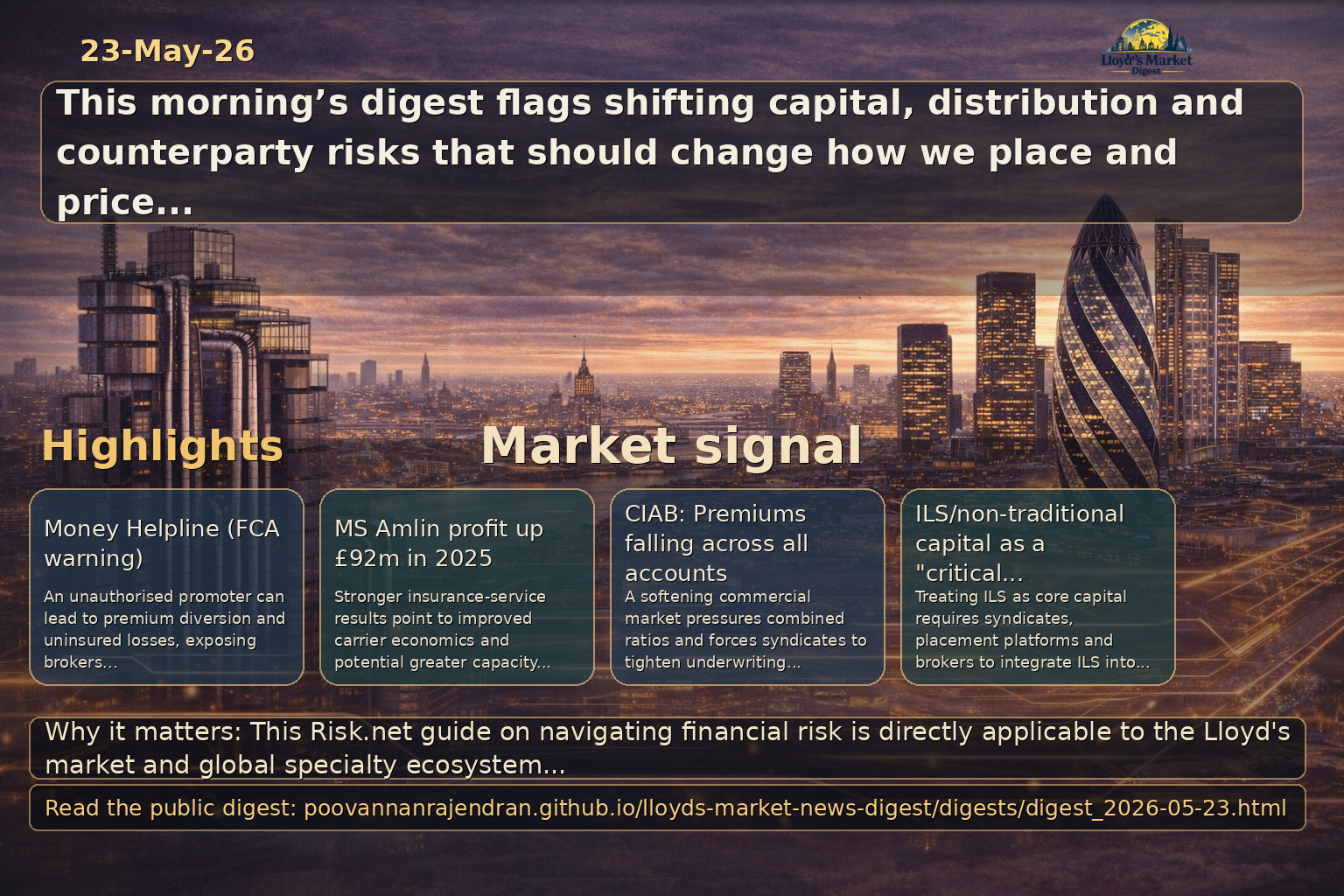
Why it matters: Money Helpline Ltd appears on the FCA Warning List as an unauthorised promoter; such entities can be used to mislead customers into believing they have placed insurance cover, creating direct exposure for brokers, syndicates and placement platforms if mis-selling or premium diversion occurs.
- Operational impact: potential for uninsured losses and claim disputes if clients believe cover was placed via legitimate market channels but actually engaged with an unauthorised actor.
- Reputational risk: name confusion with legitimate advisory or broking services can erode trust in brokers and Lloyd's brands, especially if consumers attribute fraud to market participants.
- Mitigation actions: validate any referral/source of business against FCA registers, blocklist known unauthorised names on placement platforms, and require insurer confirmation of bind and premium receipt before recognizing cover.
Source: fca.org.uk
Why it matters: Kolipfet's presence on the Warning List signals the ongoing use of obscure or short-lived entities to target UK customers; such actors can exploit online distribution channels and interfere with specialty placements or intermediary networks feeding Lloyd's business.
- Distribution chain vulnerability: digital or white-label channels used by brokers and MGAs may unknowingly route business from fraudulent sources, increasing risk of premium non-payment and voided policies.
- Compliance exposure: accepting new counterparties without robust KYC and FCA checks increases AML/CTF and regulatory risk for firms operating in the Lloyd's ecosystem.
- Controls to implement: integrate automated FCA warning-list screening into onboarding, require enhanced due diligence for non-standard introducers, and enforce escrowed or confirmed premium flows for new intermediaries.
Source: fca.org.uk
Why it matters: Swift Finance Bank being flagged as unauthorised highlights the specific threat of fake banking/payment entities used to divert premiums or collect funds purportedly for insurance, a core concern for syndicates, brokers and placement platforms handling large flows.
- Financial integrity risk: counterfeit banking/payment channels facilitate premium diversion, leaving syndicates exposed to uninsured exposures and operational reconciliation failures.
- Platform and settlement impact: marketplace and binding authority platforms must ensure trusted, validated payment endpoints to prevent funds being routed to fraudulent accounts.
- Recommended safeguards: mandate insurer confirmation of premium receipt from named banks, use trusted payment gateways with reconciled rails, and suspend transactions associated with any FCA-warning entity pending investigation.
Source: reinsurancene.ws
Why it matters: MS Amlin's stronger insurance service profit and improved combined operating ratio indicate healthier underwriting returns in specialty lines, easing capital strain for syndicates and influencing pricing and capacity dynamics across Lloyd's market.
- Improved capacity availability: Stronger carrier economics signal greater willingness to deploy or renew capacity in specialty segments, potentially moderating price hardening in select classes.
- Underwriting discipline validated: Brokers and placement platforms should prepare for continued focus on risk selection and terms as carriers leverage improved results to refine appetite rather than broadly expand risk-taking.
- Commercial dialogue opportunity: Syndicates and brokers can use improved carrier performance as a basis to negotiate sustainable long-term placements, emphasizing data-driven renewal discussions and collaboration on loss mitigation.
Source: reinsurancene.ws
Why it matters: Howden's launch of a dedicated U.S. Aviation Practice reflects broker-led specialization to serve technically complex exposures, increasing direct competition for placement flow into Lloyd's syndicates and global aviation carriers.
- Elevates technical placement demand: Syndicates and capacity providers should expect more targeted submission flows requiring specialist underwriting appetite and tailored policy wordings.
- Competitive repositioning: Other global brokers and managing agents need to assess capability gaps and consider strategic hires or alliances to retain aviation client relationships.
- Platform and workflow impact: Placement platforms should prioritize aviation-specific submission templates, data capture and rapid evidence-of-cover processes to support higher-touch placements.
Source: artemis.bm
Why it matters: TWIA's fully-committed $2.28bn renewal illustrates how broker-driven competitive processes and mixed capital stacks (traditional reinsurance + cat bonds) can deliver large, cost-efficient towers for public sponsors — a blueprint relevant to syndicates and placement platforms.
- Broker-auction style placement shows value of active broker engagement and platform capability to aggregate capacity quickly for large public accounts.
- Mix of capacity and cat bond roll-off highlights timing risks in ILS liquidity—syndicates should assess corridor capacity and co-investment opportunities.
- Public-sector mandates and 1-in-50 funding targets create predictable origination opportunities for specialty syndicates and placement platforms able to execute sizeable towers.
Source: artemis.bm
Why it matters: Patriot Select's $310m renewal, including explicit second-event cover and FHCF layering, reflects market capacity returning to Florida risk and the evolution of multi-event solutions that matter for specialty underwriters and brokers.
- Second-event protection demand highlights a gap in traditional single-event towers—opportunity for syndicates to design multi-event products or partner with ILS structures.
- Improving pricing and legislative reform in Florida can shift capacity back to private market players; syndicates should evaluate re-entry or expansion strategies.
- Brokers must construct hybrid towers combining private markets, state pools and layered placements to optimise cost and capital usage for clients.
Source: artemis.bm
Why it matters: Commentary from Gallagher Securities that ILS/non-traditional capital are a 'critical extension' of traditional reinsurance underscores a strategic imperative: integration of ILS into capital modelling and product design across Lloyd's and global specialty markets.
- C-suite and capital committees must treat ILS as core capital options—revising capital models, ALM and stress testing to reflect hybrid funding sources.
- Syndicates should develop capabilities to co-ordinate with ILS desks, including commutable terms and standardised trigger definitions to facilitate investor participation.
- Brokers and placement platforms that can demonstrate alignment of underwriting economics with investor return profiles will capture intermediary fees and origination flow.
Source: artemis.bm
Why it matters: Mangrove's upsized $111m debut Buttonwood Re cat bond and tight pricing illustrate investor appetite for well-underwritten, sponsor-led ILS transactions and validate smaller sponsor access to capital markets via placement platforms.
- Successful debut issuance with oversubscription potential demonstrates that well-presented residential catastrophe risk can attract competitive ILS pricing even for newer sponsors.
- Placement platforms enabling multi-tranche structures widen the sponsor base and create disintermediation risks for traditional retrocession and quota-share business.
- Lloyd's syndicates should evaluate partnership or white-label opportunities to underwrite originator risk or provide wrap solutions for smaller sponsors seeking cheaper risk transfer.
Source: artemis.bm
Why it matters: State Farm's $1.5bn private Merna Re cat bond underscores the prevalence of club/private placements for large sponsors — a trend that shifts sizeable risk away from open-market syndication and emphasises bespoke investor relations.
- Private/club offerings reduce public market liquidity for similar risks and constrain participation of syndicates that lack direct investor relationships.
- Brokers and placement platforms must invest in confidential, bespoke structuring capabilities and cultivate direct ILS investor partnerships to remain relevant on large deals.
- Lloyd's syndicates should prioritise strategic alliances, co-sponsorships or bespoke capacity solutions to access flows that private placements are diverting from the open market.
Source: businessinsurance.com
Why it matters: A Berkshire Hathaway unit launching Swiss casualty capacity signals new specialty product flows and cross-jurisdictional capacity relevant to Lloyd's and global brokers seeking admitted and non-admitted placement options.
- Increases competition for casualty lines placed via Lloyd's syndicates and specialty MGAs, potentially compressing premium but expanding capacity.
- Creates new lead terms for brokers working continental EMEA placements, affecting broker negotiating leverage and platform routing.
- Raises attention on fronting, co-insurance and reinsurance structures for cross-border casualty exposures.
Source: businessinsurance.com
Why it matters: Appointment of a U.K. underwriting chief at Bishop Street highlights talent centralization in London market underwriters and potential shifts in syndicate strategy or appetite.
- May realign Bishop Street's product focus and capacity appetite, altering broker placement patterns in Lloyd's specialty classes.
- Signals continued recruitment competition for senior underwriters within the London market and potential impact on syndicate retention.
- Impacts relationships with global brokers and managing agents that route business through UK placements and delegated authority.
Source: businessinsurance.com
Why it matters: Sava Re's growth in business volume driven by reinsurance gains underscores shifting reinsurance flows that affect syndicate retrocession and capacity dynamics.
- Enhanced reinsurance capacity can relieve pressure on syndicate balance sheets but may alter pricing signals for treaty renewals.
- Brokers should reassess placement strategy with growing alternative reinsurance entrants and adjust retrocession structures.
- Potential for improved terms on large or layered programmes that syndicates and specialty insurers place with reinsurers.
Source: businessinsurance.com
Why it matters: Fitch noting higher earnings for European reinsurers despite revenue declines points to selective underwriting profitability impacting capital flows to Lloyd's syndicates and specialty markets.
- Syndicates reliant on reinsurance capacity should monitor reinsurer profitability for availability and pricing volatility at treaty renewals.
- Brokers need to incorporate reinsurer margin trends into client pricing and risk-transfer solutions.
- Positive earnings may attract capital back into specialty reinsurance segments, altering competition for large placements.
Source: businessinsurance.com
Why it matters: Workforce shortages in healthcare highlighted by the TV documentary have implications for claims trends, pricing and underwriting in professional liability and medical malpractice policies used by syndicates and brokers.
- Increased staffing and care-quality pressures can drive frequency and severity in medical professional liability exposures underwritten by specialty carriers.
- Brokers should flag sector-specific risk-mitigation and loss-control services when negotiating placements with syndicates.
- Underwriters may respond with tighter terms or higher retentions on healthcare account placements routed through London and global specialty markets.
Source: globalreinsurance.com
Why it matters: M&A insurance is emerging as a strategic enabler of dealmaking driven by private equity activity. This creates a direct growth pathway for Lloyd’s syndicates, global specialty carriers and brokers through tailored warranty, indemnity and contingent liability capacity delivered via efficient placement platforms.
- Commercial opportunity: Develop product suites (rep & warranties, tax, contingent liabilities) and allocate dedicated capacity across syndicates to capture fee and premium income from increasing PE-driven transactions.
- Distribution & execution: Brokers and placement platforms must streamline placement workflows, underwriting data exchange and binding authority processes to compress deal timetables and improve certainty for sellers and lenders.
- Underwriting & claims discipline: Embed transaction-specific due diligence and bespoke exclusions in policy terms; align capacity providers, legal advisors and banks to reduce post-close friction and limit moral hazard.
Source: globalreinsurance.com
Why it matters: Speakers warned that natural catastrophe perils are expanding with climate change and the industry must be bolder beyond short-term pricing. Lloyd’s syndicates and global reinsurers need to combine advanced modelling, capital strategy and public‑private engagement to preserve insurability and reduce the protection gap.
- Strategic underwriting recalibration: Reassess capacity allocation and long-term pricing frameworks using improved cat models, forward-looking scenarios and stress tests to avoid ad hoc rate shocks and protect balance sheets.
- Public‑private partnerships & resilience finance: Syndicates and brokers should actively design blended solutions (parametric triggers, resilience credits, sovereign and municipal programmes) and pursue partnerships with governments and investors to shrink protection gaps.
- Product and platform innovation: Accelerate parametric, index-based and multi-year cover lines distributed via digital placement platforms; invest in data partnerships and broker-led client advisory to translate resilience investment into insurable exposure.
Source: insurancejournal.com
Why it matters: CIAB survey reporting premiums falling across account sizes is an early, authoritative indicator of a softening commercial market that directly pressures Lloyd’s syndicates, global specialty brokers and placement platforms on rate, capacity and terms.
- Underwriting discipline: Syndicates must re‑test minimum rate thresholds, tighten class segmentation and reinforce non‑price underwriting levers to protect combined ratios.
- Broker strategy: Global brokers should pivot to value‑added services (risk engineering, loss control, analytics) and bespoke products to offset fee pressure and preserve margins.
- Placement platforms: Invest in speed and transparency (real‑time quoting, analytics) to win share as buyers concentrate placements and demand multi‑carrier execution.
Source: insurancejournal.com
Why it matters: Acrisure’s announced 11% headcount reduction framed as tech/AI enabled efficiency highlights industry‑wide distribution rationalisation and the acceleration of platform‑led broking models that reshape placement flows into Lloyd’s and specialty markets.
- Distribution risk: Syndicates should assess concentration risk as broker consolidation and automation change referral patterns and may concentrate business with fewer digital platforms.
- Platform opportunity: Placement platforms and MGAs can capture share by integrating AI workflows, APIs and straight‑through processing to deliver lower acquisition cost and faster binding.
- People and change: Brokers must redesign sales compensation and upskill remaining staff for advisory and complex placement roles; syndicates should champion partnership models that reward digital access.
Source: insurancejournal.com
Why it matters: High‑profile climate litigation against a major energy firm underscores legal and liability tail risk for energy sector clients; this trend increases demands on wordings, coverage clarity and long‑tail reserve modelling for syndicates active in energy and environmental lines.
- Policy drafting: Reassess pollution, D&O and legacy liability wordings and exclusions to limit ambiguous exposure and litigation risk transfer.
- Aggregation modelling: Update scenario analysis and capital plans for climate‑litigation cascades, including defence costs and reputational capital impacts.
- Client engagement: Brokers should expand legal‑risk advisory for energy clients and package preventative services (ESG roadmaps, disclosures) to reduce insurer loss frequency.
Source: insurancejournal.com
Why it matters: Satellite imagery showing expanding oil slicks in the Persian Gulf signals elevated marine, energy and environmental exposure from regional conflict and attacks—immediate implications for marine hull, cargo, PD, POL and war risk capacity in Lloyd’s and global markets.
- Terms and capacity: Syndicates should revisit war and political violence clauses, adjust capacity allocation to regional marine/energy portfolios and consider tightened underwriting in high‑sea lanes.
- Real‑time risk intel: Placement platforms and brokers must integrate satellite and AIS data into exposure tracking to support rapid claims triage and dynamic capacity calls.
- Reinsurance and exclusions: Reassess treaty and facultative reinsurance structures for aggregation and consider temporary tightened terms or explicit war premiums.
Source: insurancejournal.com
Why it matters: The Bundibugyo Ebola episode and delayed detection highlight persistent pandemic and infectious‑disease tail risk exposure for BI, event cancellation, travel and employer liability products handled by specialty insurers and Lloyd’s syndicates.
- Coverage clarity: Review and standardise pandemic exclusions, BI wording triggers and notification requirements to reduce ambiguity and litigation risk.
- Product innovation: Develop parametric and short‑tail pandemic products alongside crisis response services to meet corporates’ demand for rapid liquidity.
- Aggregation and modelling: Update accumulation models for contagion scenarios and coordinate with capital providers on stress‑testing and retrocession capacity.
Source: insurancetimes.co.uk
Why it matters: Regional broker buy-ins preserve client continuity and consolidate distribution channels that feed Lloyd's and specialty markets; these transactions provide a playbook for managing succession without disrupting key placement relationships.
- Preserves long-term broker-syndicate relationships: retaining trading names and founder involvement reduces counterparty disruption for syndicates and wholesale markets.
- Succession model for regional distribution: buy-ins rather than full roll-ups can retain local expertise while enabling scale—relevant for syndicates assessing distribution risk and capacity allocation.
- Opportunity to standardise placement practices: acquiring brokers can be targeted for onboarding to common placement platforms and data standards to improve quoting and claims communication.
Source: insurancetimes.co.uk
Why it matters: Leadership change at a major broker/insurer technology vendor signals continuity risk and potential strategic shifts in platform roadmap—critical for brokers, MGAs and syndicates relying on vendor integrations for placements and data flow.
- Roadmap continuity matters for placement platforms: new MD priorities may accelerate or reprioritise features that affect Lloyd's electronic placement and broker workflows.
- Integration and European expansion implications: leadership with regional experience can influence cross-border compatibility and compliance, affecting syndicate access to EEA-brokered business.
- Signal on talent and vendor stability: C-suite movement at core tech providers should prompt counterparties to reassess vendor SLAs and contingency plans for critical placement systems.
Source: insurancetimes.co.uk
Why it matters: A parliamentary inquiry into consumer insurance regulation materially increases supervision risk around distribution, claims handling and dispute resolution—areas that directly affect broker conduct, syndicate exposure and platform compliance obligations.
- Potential for stricter enforcement and reporting: brokers and syndicates should prepare for enhanced transparency and claims handling scrutiny that could change settlement practices.
- Distribution and product design impact: findings may mandate changes to product disclosures and distribution incentives, affecting how Lloyd's capacity is marketed and placed through intermediaries.
- Implications for placement platforms: platform operators may need to implement additional audit trails, consumer-facing disclosures and dispute-resolution workflows to satisfy regulatory expectations.
Source: insurancetimes.co.uk
Why it matters: Employee wellbeing and inclusion programmes at major insurers influence retention and capability in underwriting and client servicing teams—critical for specialist talent continuity in Lloyd's and global specialty markets.
- Retention of specialist underwriting talent: wellbeing and inclusion training reduce attrition risk, protecting institutional knowledge important for complex risk assessment.
- ESG and client perception: progressive employee policies enhance corporate reputation with brokers and clients, aiding commercial negotiations for capacity.
- Operational replicability for brokers and MGAs: targeted training programmes can be adopted across broking teams to support inclusive culture and operational resilience.
Source: insurancetimes.co.uk
Why it matters: Senior appointments and moves at market leaders (underwriting, claims and placement functions) directly influence claims strategy, underwriting appetite and distribution dynamics that shape Lloyd's capacity flows and broker negotiations.
- Underwriting leadership shifts drive appetite and pricing: new CUO roles typically recalibrate risk appetites and segmentation, affecting lines where syndicates deploy capacity.
- Claims leadership affects loss development and data usage: senior claims appointments can accelerate claims-data integration into placement analytics and pricing decisions.
- Broker-syndicate relationship management: leadership changes at major brokers and insurers provide windows to renegotiate placement terms, data sharing and service level agreements.
Source: reinsurancene.ws
Why it matters: Marsh's re-election of its full board signals continuity in strategy and governance at one of the largest global brokers, reducing near-term strategic uncertainty for carriers, syndicates and placement partners.
- Strategic predictability for carriers: Stable leadership reduces the likelihood of sudden shifts in brokerage distribution strategy, supporting longer-term capacity planning at Lloyd's and global insurers.
- Implications for consolidation and partnerships: Consistent board oversight suggests continued focus on profitability and selective M&A—syndicates should monitor potential changes in broker-syndicate partnerships and panel composition.
- Engage on product roadmap: Placement platforms and syndicates should proactively engage Marsh on digital placement priorities and data standards to align on workflow improvements and sustained submission volumes.
Source: reinsurancene.ws
Why it matters: Aon's appointment of a Head of Lenders Solutions highlights growing broker investment in credit, surety and lender-focused products—areas that intersect with specialty capacity and distribution channels at Lloyd's and global markets.
- Expands distribution of credit-linked risk: Syndicates and reinsurers should anticipate increased broker-led origination of lender and trade-credit business, requiring clear appetite and terms for non-traditional submission structures.
- Cross-sell and placement synergies: Brokers will leverage lender solutions to cross-sell specialty coverages (political risk, structured credit)—placement systems must support multi-class, multi-carrier packaging.
- Data and collateralisation expectations: As lenders-focused solutions scale, underwriters will demand enhanced credit analytics and standardized collateral/claims mechanics; brokers and platforms must invest in credit-data integration.
Source: risk.net
Why it matters: The guide’s emphasis on moving beyond siloed risk functions is material for Lloyd’s syndicates and managing agents that must align underwriting, actuarial and treasury to protect underwriting profitability and maintain capital efficiency in volatile markets.
- Adopt integrated stress‑testing across market, credit and liquidity exposures so syndicates can quantify capital and collateral needs under severe but plausible scenarios.
- Align underwriting and treasury decision‑making to optimise capital allocation and pricing — reducing knee‑jerk premium/limit changes that damage long‑term broker and client relationships.
- Equip brokers and placement platforms with consolidated exposure data to improve appetite signalling, expedite placements and reduce holdbacks driven by perceived counterparty risk.
Source: newsnow.co.uk
Why it matters: Ousmane Sonko coverage indicates localized political tensions and potential for civil unrest in Senegal — material for political violence, event cancellation, trade credit and marine exposures in the Lloyd's global specialty book.
- Monitor legal developments and protest activity closely; elevated POL/PRU (political risk/political violence) appetite needed for exposures in Dakar and regional projects.
- Re-assess country limits, reinsurance attachment points and accumulation models for West Africa exposures, particularly for energy and infrastructure risks.
- Advise brokers to adjust policy wordings and contingency clauses (evacuation, business interruption and political violence endorsements) and prepare rapid placement workflows.
Source: newsnow.co.uk
Why it matters: Bassirou Diomaye Faye's presidency signals potential policy shifts and rapid reform in Senegal that can change sovereign credit, taxation and contract enforceability — directly relevant for infrastructure, energy and commodity risk underwriters and brokers.
- Conduct immediate sovereign and regulatory due diligence for insureds with on‑shore investments or concessions; update country risk gradings used by syndicates.
- Stress‑test infrastructure and project finance portfolios for expropriation, contract frustration and currency transfer restrictions.
- Engage local broker networks for granular market intelligence and pre‑emptive re‑pricing or limit reductions where political transition risk is heightened.
Source: newsnow.co.uk
Why it matters: Aggregated Senegal news of government dismissals and dissolutions elevates short‑term political volatility and regulatory uncertainty — a cross‑cutting risk for Lloyd's specialty lines with regional exposure.
- Increase near‑term surveillance of regulatory announcements, tariffs and licensing decisions affecting underwritten operations.
- Advise clients on contingency planning and consider conditional clauses for public authority-related BI (business interruption) triggers.
- Placement platforms should flag transactions with Senegal exposure for expedited underwriter review and potential conditional pricing.
Source: newsnow.co.uk
Why it matters: Space tech headlines reflect growing satellite, launch and on‑orbit servicing activity — a fast‑expanding specialty that presents underwriting opportunity (launch, on‑orbit, liability, satellite operator CAPEX/OPEX) for Lloyd's syndicates and brokers.
- Syndicates should consider dedicated capacity or sectional pools for space risks, supported by telemetry and orbital debris modelling.
- Underwriters must invest in technical talent and partner with aerospace engineers to refine loss scenarios, pricing and exclusions for collision, debris and cyber interference.
- Brokers and placement platforms should build modular policy wordings (launch, satellite hull, third‑party liability and contingent business interruption) and enable faster e‑placement for time‑sensitive launches.
Source: newsnow.co.uk
Why it matters: A high‑profile US national security appointment influences geopolitical risk assessments, sanction regimes and intelligence‑led threat forecasting — affecting cyber, trade sanctions, and multinational exposures underwritten by Lloyd's syndicates.
- Update geopolitical and sanctions monitoring frameworks; re‑evaluate exposure to jurisdictions likely to be affected by new intelligence postures.
- Align cyber‑insurance war & exclusion triggers and crisis response arrangements with revised government threat assessments.
- Coordinate with global brokers to communicate potential changes in claims handling, sanctions screening and client advisory requirements.