Source: fca.org.uk
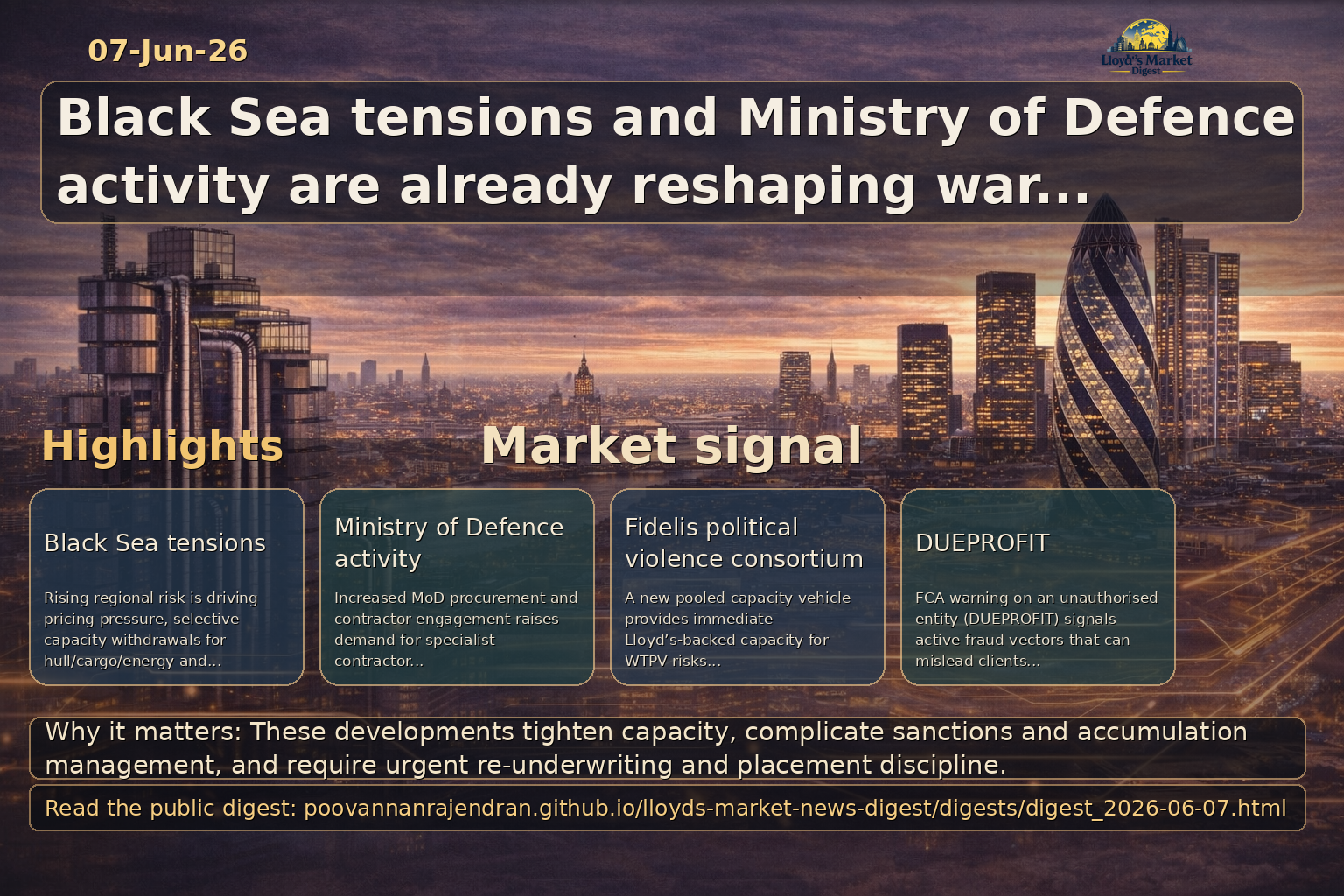
Why it matters: FCA warning on an unauthorised entity (DUEPROFIT) signals active fraud vectors that can mislead clients, misdirect premium flows and expose brokers and syndicates to reputational and operational risk.
- Immediate verification: require FCA authorisation evidence and FRN checks for new counterparties and platform partners before accepting business or directing clients.
- Client protection: update client advisories and compliance scripts to warn about unauthorised offers, and document acceptance decisions for audit trail.
- Platform controls: instruct placement platforms and broker networks to block known unauthorised domains and implement escalation protocols for suspicious inbound parties.
Source: fca.org.uk
Why it matters: The www.privatemarketunlock.uk warning is another example of unauthorised offerings targeting UK customers and channels that could be used to impersonate legitimate market capabilities.
- Enhanced onboarding: mandate platform-level vetting and periodic re‑validation of distribution partners and third‑party portals used for private placements.
- Monitoring: deploy phishing and domain‑watch capabilities to detect look‑alike sites and notify front‑office and clients promptly.
- Escalation: integrate FCA warning-list alerts into broker compliance workflows and require immediate suspension of any counterparty with a warning.
Source: fca.org.uk
Why it matters: The Domestic Care and Repair Ltd warning highlights consumer‑facing unauthorised operators; vulnerabilities in retail distribution channels could produce downstream AML, claims and reputational exposures for insurers and intermediaries.
- Retail distribution risk: review retail intermediary panels and small‑business referral partners for signs of unauthorised activity or improper use of insurer branding.
- Training: brief retail brokers and client‑facing teams to recognise unauthorised propositions and to refuse unfamiliar payment routes or premium collection methods.
- Contract safeguards: include express clauses in distributor agreements prohibiting use of unauthorised sub‑agents and requiring immediate notification of FCA warnings.
Source: fca.org.uk
Why it matters: FCA proposals to simplify climate reporting (reducing reliance on product‑level TCFD reports) will lower reporting burden but require syndicates and platforms to recalibrate disclosures, client communications and underwriting data flows.
- Assess impact: map current TCFD/product‑level reporting activities and quantify compliance cost and data gaps to determine where simplification can be operationalised.
- Underwriting alignment: ensure change in disclosure format does not degrade climate‑risk inputs to underwriting models and reserving; preserve material data feeds for catastrophe and climate scenario analysis.
- Client communications: coordinate with distribution partners to standardise simpler climate information consistent with Consumer Duty while maintaining transparency for wholesale and specialty clients.
Source: fca.org.uk
Why it matters: The Bank of England/FCA MoU review confirms effective coordination on FMI supervision — relevant to placement platforms, trade/settlement systems and cross‑market continuity planning for specialty and Lloyd’s participants.
- Dependency mapping: identify critical FMIs and placement/settlement platforms relied upon by syndicates and brokers; ensure regulator contact and escalation points are known.
- Engage with authorities: proactively participate in consultations or industry fora to shape supervisory expectations for placement platform resilience and interoperability.
- Test arrangements: incorporate FMI failure scenarios into business continuity and settlement disruption exercises with platforms and third‑party service providers.
Source: businessinsurance.com
Why it matters: MS Amlin's finding that cat models miss significant earthquake risk highlights potential undercapitalization and pricing misalignment for syndicates exposed to seismic perils.
- Underscores the need for syndicates and Lloyd's managing agents to reassess aggregation and accumulation controls beyond standard model outputs.
- Creates demand for alternative data, scenario analysis and bespoke modelling from brokers advising large portfolios or placements.
- May drive reinsurance buying behavior and pricing adjustments across catastrophe layers, affecting capacity and terms on placement platforms.
Source: businessinsurance.com
Why it matters: Fidelis' political violence consortium creates a specialist placement vehicle and additional capacity that brokers and Lloyd's syndicates will need to account for when structuring multi-jurisdictional political violence/security covers.
- Establishes a pooled capacity model attractive to multinational clients exposed to geopolitical risk; syndicates should assess appetite to co-participate or provide follow-layers.
- Requires brokers to coordinate complex sanctions screening, threat intelligence and bespoke wording across placement platforms.
- May accelerate demand for delegated authority and digital placement workflows to speed binding on volatile political risk accounts.
Source: businessinsurance.com
Why it matters: Gothaer's pursuit of a large German flood placement signals growing insurer willingness to underwrite severe flood risk and highlights placement opportunities for global specialty capacity.
- Demonstrates appetite for sizable nat-cat exposures that could attract syndicate capital if structured with parametric or layered reinsurance solutions.
- Requires robust local modelling, flood-mitigation underwriting criteria and clear policy wordings—areas where brokers add material value.
- Encourages collaboration between primary carriers, reinsurers and platforms to manage accumulation and retrocession efficiently.
Source: businessinsurance.com
Why it matters: Zurich expanding data center coverage into Europe and Brazil highlights a high-growth specialty segment requiring multinational capacity, complex sublimits and cyber-physical combined coverages relevant to Lloyd's syndicates and brokers.
- Signals market opportunity for insurers and syndicates to design integrated property-cyber products tailored to mission-critical infrastructure.
- Cross-border coverage raises questions on jurisdictional exposures, contingent business interruption and supply-chain aggregation that brokers must model for placements.
- Pushes demand for coordinated placement workflows and specialist underwriting expertise on platforms to bind multi-territory programs quickly.
Source: businessinsurance.com
Why it matters: Executive profiles such as Corey Lewis provide intelligence on leadership and relationship structures that influence broker-syndicate corridors and distribution strategies in the specialty market.
- Tracking senior executive roles helps underwriters and brokers anticipate shifts in account stewardship, product focus and appetite.
- Senior hires or role changes can presage strategic refocusing at retail broker houses or managing agents—impacting placement flows.
- Maintaining relationship maps informed by such profiles supports targeted business development and renewal negotiations.
Source: globalreinsurance.com
Why it matters: The webinar frames near‑term market dynamics that will affect syndicate and reinsurer underwriting decisions for energy exposures in the Gulf. It signals shifts in risk perception that impact capacity, pricing and the design of facultative and treaty programmes—key considerations for brokers and placement platforms coordinating renewals and retro coverage.
- Capacity & capital: Expect selective capacity deployment by Lloyd’s syndicates and global reinsurers; focus on attachment levels, aggregate limits and retrocession strategy to manage concentration in GCC energy risks.
- Placement strategy: Brokers should prioritise tailored programme structures, leveraging electronic placement platforms and syndicate relationships to secure diversified capacity and negotiate terms for complex regional energy portfolios.
- Pricing & ratings: Anticipate repricing and increased emphasis on risk differentiation; syndicates must align underwriting guidance with rating agency expectations and reinsurance buyers should prepare for tighter terms at upcoming renewals.
Source: insurancejournal.com
Why it matters: Howard Hughes Holdings' all-cash acquisition of Bermuda-based Vantage signals continued strategic interest from non-traditional corporate buyers in scalable specialty re/insurers — a development that can change capacity sourcing, partnership models and pricing dynamics for Lloyd's syndicates and global brokers.
- Reassess counterparty and capacity risk: brokers and syndicates should evaluate how HHH ownership may shift Vantage's appetite, appetite certainty and reinsurance retro arrangements.
- Expect redistribution of specialty capacity and competition: corporate-backed capital can pursue profitable specialty niches, pressuring Lloyd's syndicates on price and talent.
- M&A sets valuation and strategic benchmark: advisors and boards should use this deal to benchmark Bermuda-target valuations and anticipate further consolidation when evaluating capital strategies.
Source: insurancejournal.com
Why it matters: Allianz's advanced talks to acquire Portuguese insurer Caravela reflect continued European consolidation that affects distribution relationships and local capacity availability — relevant for Lloyd's brokers placing EMEA business and syndicates reassessing regional partnerships.
- Distribution footprint implications: brokers should map how Allianz ownership could alter panel access, delegated authority arrangements and cross-border placement options in Iberia.
- Potential product and pricing shifts: consolidation may standardize underwriting disciplines and pricing, requiring syndicates to recalibrate competitiveness for Portugal/EMEA risks.
- Strategic due diligence cue: syndicates and global brokers should monitor such transactions as indicators of where global carriers seek local market scale and capability for platform partnerships.
Source: insurancejournal.com
Why it matters: The Fidelis Partnership's PVT consortium, placed by Guy Carpenter and including leading Lloyd's syndicates, is a direct market response to heightened demand for war, terror and political violence coverage — illustrating how coordinated Lloyd's capacity can be mobilized quickly through intermediary placement platforms.
- Immediate capacity relief for brokers: the consortium provides sizeable Lloyd's-backed capacity for WTPV risks, enabling larger or more complex placements to be transacted.
- Placement platform dynamics: brokers must adapt submission strategies and negotiate consortium terms (pro rata vs layered capacity, shared exposures) to secure competitive terms for clients.
- Underwriting and reinsurance implications: syndicates should align retro and aggregate protections to support consortium deployments while monitoring accumulations and pricing adequacy.
Source: insurancejournal.com
Why it matters: Senior claims appointments at Aon and Canopius (promotions and hires) reflect the elevated strategic focus on claims advocacy and carrier-side claims leadership — both materially influencing client outcomes, loss creep management and insurer-broker relationships across Lloyd's and global specialty markets.
- Enhanced claims advocacy capability: broker clients will expect elevated EMEA claims advocacy from Aon, affecting negotiation leverage with carriers and syndicates.
- Carrier claims leadership reshapes settlement approaches: Canopius' hire signals carrier-level emphasis on claims discipline and client service, which can influence syndicate reserving and reinsurance costs.
- Talent mobility is a market signal: boards and chief underwriters should track senior claims moves as indicators of competitive differentiation and potential shifts in claims-handling partnerships.
Source: insurancejournal.com
Why it matters: WTW's AI Workforce Transformation launch highlights how advisory firms and brokers are operationalizing AI to drive productivity and adoption — a development with direct consequences for placement efficiency, underwriting throughput and broker-carrier integration on platform workflows.
- Prioritize AI use-cases that accelerate placement: brokers and syndicates should target AI to reduce submission handling time, improve risk stratification and speed-bind decisions on placement platforms.
- Organizational change and reskilling: executives must invest in targeted reskilling (claims, underwriting, placement operations) to convert AI tools into measurable productivity gains and adoption.
- Vendor and platform integration strategy: placement platform owners and syndicates should evaluate AI diagnostics (job-level automation potential) when selecting partners to ensure seamless workflow and data integrity.
Source: insurancetimes.co.uk
Why it matters: Return of an experienced portfolio strategy lead at Swiss Re signals renewed emphasis on portfolio steering and underwriting discipline that will influence capacity terms and reinsurance structures for Lloyd’s syndicates and global specialty markets.
- Reassess reinsurance and facultative programme design: expect tighter portfolio controls and potential changes to appetite that could affect syndicate capacity allocation.
- Engage early with treaty and facultative partners: syndicates and brokers should open dialogue on portfolio priorities to influence terms and placement timing.
- Review collateral and capital planning: underwriters and placement platforms must model scenarios for tightened underwriting filters and rate/terms shifts driven by active portfolio steering.
Source: insurancetimes.co.uk
Why it matters: Aon appointing an EMEA chief claims officer centralises claims strategy across a major broker, sharpening claims advocacy and potentially changing claim-handling expectations for carriers, syndicates and placement intermediaries.
- Anticipate elevated claims advocacy standards: carriers and syndicates should prepare for stronger broker-driven claims negotiation and resolution demands.
- Coordinate claims data and KPIs with brokers: placement platforms and underwriters should align performance metrics and data sharing protocols to support timely settlements.
- Reinforce reserving and dispute processes: insurers and syndicates need clear escalation pathways and resource plans to manage potentially higher-intensity advocacy across complex EMEA claims.
Source: insurancetimes.co.uk
Why it matters: Aon’s UK referral arrangement with a financial planning firm demonstrates cross-referral distribution models that reshape private-client flows — relevant to specialty underwriters writing high-net-worth, D&O/private client risks and brokers seeking to enhance client lifetime value.
- Map referral pathways into placement strategy: syndicates and MGAs should identify products suited to inbound referrals and adjust capacity and pricing accordingly.
- Strengthen private-client product integration: develop bundled propositions (insurance plus financial planning touchpoints) to capture cross-sold flows.
- Ensure compliance and data governance across referrals: brokers and platforms must implement controls for client onboarding, suitability and disclosure when channels converge.
Source: insurancetimes.co.uk
Why it matters: A 26% uplift in pet policies following renters’ rights legislation creates material new demand in personal lines; specialty carriers and MGAs should reassess underwriting appetite, pricing and distribution partnerships to capture this shift.
- Re-evaluate personal-lines capacity and pricing models: syndicates and MGAs writing pet and household risks should test inflation-adjusted assumptions and new loss frequency patterns.
- Partner with brokers and platforms for fast onboarding: distribution infrastructure must scale to convert legislative-driven demand while preserving underwriting standards.
- Monitor exposure concentration in rental-dense geographies: underwriters should map aggregated exposures where legislative change is most pronounced to avoid accumulation risk.
Source: insurancetimes.co.uk
Why it matters: The week’s roundup of senior hires and departures signals ongoing talent churn across UK broking and insurer functions, with implications for governance, MGA leadership and distribution strategy within the Lloyd’s ecosystem.
- Prioritise succession and retention plans in key distribution roles: brokers and syndicates should secure continuity for placement relationships and underwriting skillsets.
- Audit governance impact from NED and chair appointments: new board figures overseeing MGAs or broker divisions can shift strategic priorities — review alignment with capacity partners.
- Use talent movement to identify competitive openings: firms should target hires that bring specialized placement, underwriting or distribution expertise relevant to Lloyd’s and global specialty segments.
Source: risk.net
Why it matters: Demonstrates a pragmatic, production-ready use of AI for model validation that syndicates, Lloyd's managing agents and specialty carriers can adapt to validate credit-exposed underwriting, counterparty assessments and internal capital models.
- Operational benefit: AI assistants reduce manual validation workloads and speed review cycles, enabling smaller validation teams to cover expanding model inventories and complex credit exposures.
- Governance risk: introduces explainability, data lineage and vendor dependency issues that must be addressed through strengthened model risk management, reproducible audit trails and regulator-facing documentation.
- Market impact: brokers and placement platforms can leverage validated, AI-produced metrics to streamline credit due diligence during placements, but must embed controls to prevent overreliance on automated outputs when negotiating capacity and terms.
Source: newsnow.co.uk
Why it matters: The Black Sea is a strategic maritime and energy corridor; rising tensions materially affect hull, cargo, energy (offshore and pipeline) and war/political violence exposures. For Lloyd’s syndicates and global specialty brokers this translates into immediate pricing pressure, potential capacity withdrawals for named-peril programmes, and heightened sanctions screening and claims complexity.
- Re-rate and re-underwrite: syndicates should reassess pricing, retentions and appetite for Black Sea voyages, offshore energy projects and related cargo; expect short-term capacity compression and selective exclusions.
- Sanctions and placement controls: brokers and platforms must implement stricter sanctions screening, enhanced counterparty due diligence and real‑time voyage tracking to avoid inadvertent coverage of sanctioned entities or voyages.
- Claims and accumulation management: risk managers should model accumulation scenarios across hull, war, cargo and energy business; place contingent capacity and reinsurance to protect against multi-line shock and ensure consistent war clause wordings.
Source: newsnow.co.uk
Why it matters: Ministry of Defence activity signals changes in defence procurement, deployments and contractor engagement that increase demand for specialist cover (contract works, liability, surety, political violence) and heighten cyber and supply-chain risk for defence suppliers. Lloyd’s syndicates and brokers must align capacity, contract terms and programme structures to support large, complex defence placements.
- Tailored capacity and programme design: syndicates should offer modular programmes combining performance bonds, contractors’ all‑risk, liability and political violence covers with clear aggregate limits matching contract profiles.
- Cyber and supply‑chain focus: underwriters must stress-test defence supply chains for systemic cyber scenarios and incorporate contingent business interruption and dependent third‑party coverage where exposures are material.
- Placement discipline and contractual clarity: brokers and platforms should standardise MoD-related wordings, emphasise claims cooperation clauses, and consider programme or captive solutions to maintain continuity of capacity for long-duration government contracts.